US LLC for E-Commerce Sellers Abroad: Amazon FBA, Shopify, Walmart, Dropshipping, Importing, Sales Tax and Income Tax Explained
For online sellers abroad: when a US LLC helps, Amazon FBA vs Shopify vs dropshipping, customs after de minimis, sales tax nexus and income tax.
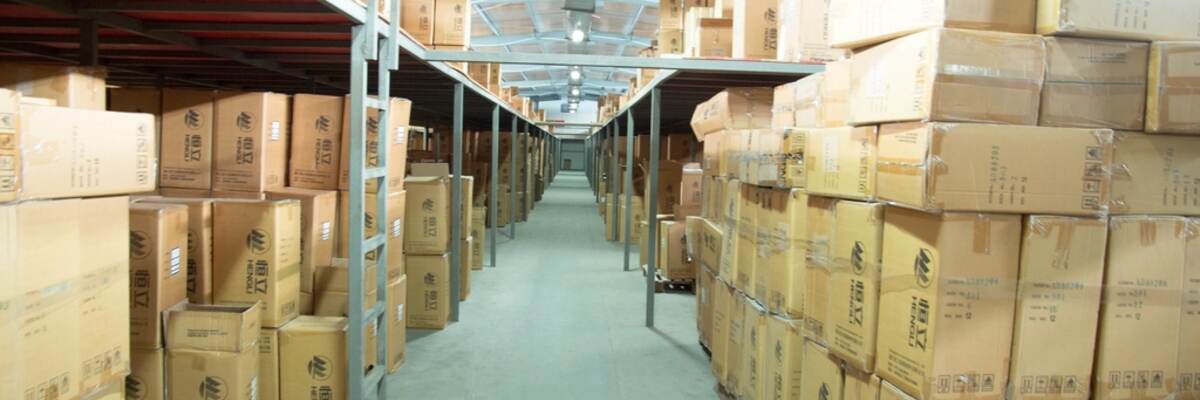
Selling to American customers is one of the most common reasons founders abroad form a US company. The US market is enormous, payment platforms and marketplaces work best with a US entity and a US bank account, and a US brand often converts better with American shoppers.
But e-commerce is also the business model where a US company raises the most questions. A consultant invoicing clients from Bangalore has a simple tax picture. A seller with stock in Amazon warehouses across six states, a Shopify store collecting card payments and containers arriving from China has three separate sets of rules to think about: customs when the goods enter the USA, sales tax when they are sold, and income tax on the profit. Each one works differently, and none of them depends on the state you form your company in.
This guide explains all three in plain language, compares the main selling models (Amazon FBA, Walmart Marketplace, your own store, dropshipping, and wholesale or distribution), covers the payment and banking issues that close more e-commerce businesses than any tax, and ends with what to do if you already have a US company selling online.
Short answer: you do not strictly need a US company to sell on Amazon or Shopify, but a US LLC with an EIN and a US bank account makes payouts, payment processors and brand ownership much easier. Form in Wyoming or New Mexico unless you will run your own warehouse or staff in a particular state. Since August 2025 almost every parcel entering the USA pays duty. Marketplaces collect sales tax on marketplace sales; your own store is your responsibility once you have nexus, and stock in a US warehouse creates nexus there. US inventory can also change your income tax position.
Do you need a US company to sell in the USA?
Not strictly. Amazon accepts international sellers in its US marketplace, and Shopify works from most countries. Many sellers form a US LLC anyway, because it gives them:
- a US business bank account for USD payouts, avoiding conversion on every payout,
- easier access to Shopify Payments, Stripe and US payment providers, see Stripe and PayPal for non-residents,
- access to marketplaces that prefer or require a US business, such as Walmart Marketplace, which accepts sellers based abroad only in limited cases and checks US business details closely,
- a US company that can own the brand and the trademark,
- smoother relationships with US suppliers, 3PLs and ad platforms,
- separation of business and personal money, and
- a business that is easier to sell: buyers of Amazon and Shopify brands often prefer a US entity with clean books.
A US company does not make imports cheaper, remove sales tax, or by itself decide whether your profits are taxed in the USA.
Which state?
For a seller without its own US warehouse or staff, the formation state matters less than people think, because sales tax depends on where your customers and stock are, not where the company is formed.
| Your situation | Usual choice | Why |
|---|---|---|
| Amazon FBA, Walmart WFS, Shopify with a 3PL, dropshipping | Wyoming | Low yearly cost, owners not on the public record, familiar to every marketplace |
| Lowest yearly cost, same model | New Mexico | No annual report at all |
| Your own warehouse, shop or staff in Florida | Florida | You will be doing business there anyway |
| Your own warehouse or staff in Texas | Texas | Same reason; Texas has no personal income tax |
With UCB, a Wyoming LLC with EIN and a virtual bank account application is $348 all-in, and the formation alone is $249. A Florida LLC is $299 and a Texas LLC $504, all-in. For a full comparison see the best state for non-residents, or answer five questions in the state selector.
One point to avoid: forming in Wyoming to save money while you rent your own warehouse and hire staff in Florida or Texas. That company will usually have to register in the warehouse state as a foreign LLC as well, so you pay for two states. Stock held by Amazon or a 3PL is different: it creates sales tax obligations, but does not usually require the company itself to register as a foreign LLC.
The selling models, and what each one means
| Model | US inventory | Sales tax collected by | Income tax complexity | Payment risk |
|---|---|---|---|---|
| Dropshipping from abroad | None | You, on your own store | Low | High (disputes) |
| Amazon FBA | In Amazon's warehouses | Amazon, on Amazon sales | Medium to high | Low to medium |
| Walmart Marketplace / WFS | In Walmart's or your 3PL's warehouses | Walmart, on Walmart sales | Medium to high | Low to medium |
| Own store + US 3PL warehouse | In your 3PL's warehouse | You | Medium to high | Medium |
| Wholesale / distribution company | In your US warehouse | You (resale certificates for B2B) | High (usually a US trade or business) | Low |
Dropshipping from abroad
You sell on your own store; suppliers ship directly to customers, often from outside the USA. You hold no US stock, so there is no physical sales tax nexus from inventory, and an LLC run from abroad usually stays outside the USA for income tax. It is the simplest model on paper.
Two things have changed it: low-value parcels now pay duty (see Customs below), and payments: long delivery times and inconsistent quality create disputes and chargebacks, and payment processors watch dropshipping closely. Set realistic delivery times on product pages, use suppliers with tracking, answer customers fast, and refund before they dispute. High dispute rates lead to reserves, payout holds or closure. See Stripe for non-residents.
Amazon FBA
You send stock to Amazon's fulfilment centres; Amazon stores, ships and handles returns. Amazon also collects and remits sales tax on Amazon sales in every state with a sales tax, which removes most of the sales tax burden. FBA's complications are elsewhere: identity verification, brand protection, insurance and the income tax question explained below.
Amazon verifies sellers carefully, including identity documents and often a video call. Matching company, EIN, bank and identity details exactly avoids most delays. If you sell private-label products, a US trademark (pending or registered) is typically required for Amazon's brand programmes, which give you tools against counterfeiters and listing hijackers. Your US company can own the trademark. See contracts, trademarks and insurance.
Walmart Marketplace
Walmart's US marketplace is more selective than Amazon's, and a US company with an EIN, a US business address and a US bank account is the practical route for most sellers abroad. Walmart Fulfillment Services (WFS) works like FBA, and Walmart collects sales tax on Walmart sales. Approval is at Walmart's discretion.
Your own store with a US warehouse
A Shopify or WooCommerce store shipping from a US third-party logistics (3PL) warehouse gives faster delivery and fewer disputes than dropshipping. But the stock in that warehouse creates physical sales tax nexus in that state from the first sale, and sales tax on your own store is your responsibility, not the platform's.
Wholesale and distribution
Exporters in India, the Middle East and Asia often set up a US company to sell to US distributors, wholesalers and retailers, who are more comfortable buying from a US entity under US-law contracts and paying a US bank account. The US company imports the goods, often selling them "landed" (duties paid) from a US warehouse. With US stock, US customers and often US staff, this is almost always a US trade or business, so it is taxed in the USA; many such businesses choose a C-Corporation. See LLC or Inc for non-residents and a US subsidiary for a foreign company.
Customs: getting goods into the USA
Anything you ship into the USA, whether a container to a warehouse or a parcel to a customer, goes through US Customs.
- Importer of record. Someone must be legally responsible for clearing the goods and paying duties. Your US company can act as importer of record with the appropriate registrations and a customs bond, or your supplier or logistics provider can, depending on the shipping terms.
- Customs broker. Most importers use a licensed customs broker to file entries, classify goods and calculate duties. Every seller who imports should work with one.
- Classification, duty rates and origin. Duties depend on the product's tariff classification and its country of origin. US tariff policy has changed repeatedly since 2025. In February 2026 the Supreme Court ruled that the emergency-powers law used for the 2025 "reciprocal" tariffs does not authorise tariffs, and replacement tariffs were imposed under a different law the same month. Rates can change at short notice, so check current rates with your broker before you price products, not once a year.
- Low-value parcels no longer enter duty-free. For years, parcels worth $800 or less entered the USA without duty (the "de minimis" rule). That treatment was suspended for parcels from China and Hong Kong in May 2025 and for every country from August 29, 2025. The suspension stayed in place after the February 2026 court ruling, customs made it indefinite by rule in mid-2026, and the 2025 tax law repeals the exemption in law from July 1, 2027. Dropshippers and sellers shipping small parcels directly to US customers should price in duties and customs processing on every order.
- Documents. Commercial invoices, packing lists and certificates of origin must be accurate; undervaluation is a serious offence.
Product rules
Many products are regulated before they can be sold in the USA: food, beverages, cosmetics, supplements and medical products (registration, labelling, safety); children's products and many consumer goods (safety standards and testing); electronics (equipment authorisation); agricultural products (inspection). Marketing claims must be truthful. Non-compliant goods can be detained or refused at the border, and marketplaces remove non-compliant listings. Check your product's requirements before the first shipment.
Sales tax: the tax most likely to surprise you
Sales tax has nothing to do with your federal return, is not handled by the IRS, and works nothing like VAT or GST.
How it works
- There is no national sales tax. States set it, and many counties and cities add their own.
- 45 states and Washington, D.C. have a statewide sales tax. Alaska has local sales taxes only; Delaware, Montana, New Hampshire and Oregon have none.
- The seller collects it from the customer at checkout and pays it to the state.
- There is no input-tax credit. Tax is charged on the final sale to the consumer; businesses buying for resale use resale certificates instead.
- Rules differ by product. Physical goods are generally taxable with state-specific exemptions (groceries, clothing); most services are not; digital products and SaaS are taxable in some states and not others.
Nexus: when a state can make you collect
You only collect a state's sales tax if you have nexus there:
- Physical nexus: an office, employees, or inventory stored in the state, including stock in Amazon or Walmart fulfilment centres and 3PL warehouses. It applies regardless of how much you sell.
- Economic nexus: since the 2018 *Wayfair* decision of the Supreme Court, states can require remote sellers to collect once their sales into the state pass a threshold. The most common is $100,000 a year in sales into the state. Some states also use a count of transactions, usually 200, but the count is disappearing: Utah dropped it from July 2025 and Illinois from January 2026, joining several states that dropped it earlier.
Thresholds are set by each state and change. A few examples relevant to sellers who also hold stock there:
| State | Remote seller threshold | Notes |
|---|---|---|
| Florida | $100,000 of taxable sales into Florida in the previous calendar year | Stock in a Florida warehouse creates nexus from the first sale |
| Texas | $500,000 of total Texas revenue in the preceding twelve months | Sellers making only marketplace sales can be excluded where the marketplace collects |
| California | $500,000 of sales of tangible goods into California | California also has strict rules for LLCs "doing business" there |
| New York | Over $500,000 and over 100 sales in the prior four quarters | |
| Nevada | Over $100,000 or 200+ retail transactions |
Marketplaces versus your own store
Every state with a sales tax has marketplace facilitator laws: Amazon, Walmart, Etsy and eBay collect and remit sales tax on sales made through them. Depending on the state, those sales may still count towards your economic nexus threshold.
Your own website is different. On Shopify, WooCommerce or any store you run, collecting sales tax is your responsibility once you have nexus. Shopify's tax tools calculate the rate, but registration and filing remain yours. This is where FBA sellers get caught: Amazon puts stock in, say, Texas, Pennsylvania and California, and the seller's own Shopify store then has physical nexus in all three, even though Amazon handles the Amazon sales.
Inventory taxes in warehouse states
A separate point for sellers who own stock in a US warehouse: some states tax business personal property, including inventory. Texas raised its exemption for business personal property from $2,500 to $125,000 from the 2026 tax year, which takes most small sellers out of it. Florida repealed its sales tax on commercial rent from October 1, 2025, which lowers the cost of leasing a warehouse. See the Texas and Florida guides for both states' rules, and state taxes for foreign-owned LLCs for the general picture.
A sensible approach
- Track sales by state, separating marketplace sales from your own store.
- Know where your inventory sits, including where Amazon or Walmart has moved it; each warehouse state is a nexus state.
- Watch thresholds in the states where you sell most.
- Register before you collect; collecting tax without a permit is itself a problem.
- Use a tax-calculation tool on your store.
- File returns monthly, quarterly or annually as each state requires, even when nothing is due.
Sales tax registration and returns are specialist work that UCB does not do. When your set-up needs it, we tell you so and refer you to a sales tax specialist.
Income tax: the question FBA sellers must not ignore
A single-member LLC owned by a non-resident is a disregarded entity. Whether its profits are taxed in the USA depends on whether the business is effectively connected with a US trade or business. See effectively connected income explained.
For a dropshipper or a seller with no US stock, staff or agents, run entirely from abroad, the answer is usually no. US inventory changes the analysis. Stock held in US warehouses and sold to US customers can, depending on the facts, contribute to a US trade or business. Relevant factors include:
- whether you have US staff or dependent agents acting for you,
- where sales are concluded and who handles them,
- whether you hold inventory in the USA and how much activity takes place around it,
- how and where title passes to the customer.
Tax treaties matter. If you live in a treaty country, business profits are generally taxable in the USA only if they are attributable to a permanent establishment, and many treaties say that using a facility solely to store or deliver goods does not by itself create one. Residents of non-treaty countries (the UAE, Brazil, Singapore and others) do not have that protection. See what changes by country.
There is no one-size answer; it depends on your set-up and your country. What is certain: a foreign-owned single-member LLC files Form 5472 with a pro forma 1120 every year, and the penalty for missing it is $25,000. Amazon, Walmart or your payment processor will issue Form 1099-K once your sales pass more than $20,000 and more than 200 transactions in a year, and those figures should reconcile with your books. See Form 5472 explained.
If your income is effectively connected, you personally file a US return (Form 1040-NR) and need an ITIN. Personal returns are not a service we offer on their own; if your ITIN application has to go in with a return, ask us. See the ITIN guide.
Transfer pricing for exporters
If your company at home manufactures or sources the goods and sells them to your US company, the price between the two should be at arm's length and documented. These related-party transactions are reported on Form 5472, and both tax authorities can question a price that leaves too much or too little profit in one country.
Banking and payments
E-commerce sellers get more questions from banks and payment providers than service businesses, because of refund and dispute risk, cross-border flows, and high volumes. What helps:
- Exact legal company name and EIN everywhere: state record, EIN letter, bank, marketplace, payment processor.
- Published policies: shipping times, returns, refunds, privacy, and real contact details.
- Gradual volume growth, or telling your processor before a big launch. A sudden spike looks like risk.
- Low dispute and refund rates.
- A backup payment method and a second bank account, because a payout hold during peak season can be fatal to cash flow.
See the US business bank account guide and why banks reject non-resident applications.
Insurance
Amazon requires sellers whose gross Amazon.com proceeds pass $10,000 in a month to carry commercial liability insurance, including product liability, of at least $1 million per occurrence and in aggregate, within 30 days. From November 2, 2026, sellers of products in Amazon's enhanced-safety categories (such as children's products, cosmetics, ingestibles and lithium batteries) need that cover whatever their sales. Check Seller Central for the current list. Wholesale buyers often require insurance in their contracts too. As you scale, it protects the company's assets if a product causes injury or damage.
Common mistakes
- Assuming Amazon handles sales tax on Shopify sales too. It handles only Amazon sales.
- Ignoring where Amazon has placed your stock. Each warehouse state is a nexus state for your own store.
- Registering in every state at once "to be safe", which creates filing obligations in states where you owe nothing.
- Pricing parcels as if they still enter duty-free. De minimis treatment ended for all countries in August 2025.
- Forming in Florida or Texas without a reason when stock in Amazon's warehouses does not need a company in that state.
- Forming in Wyoming while running your own warehouse and staff in another state, then paying for two states.
- Different spellings of the company name on the marketplace, the bank and the EIN letter, which stalls verification.
- Skipping Form 5472 because "Amazon reports my sales". It does not file your company's return, and the penalty is $25,000.
- Undervaluing goods on customs invoices to save duty.
Worked examples
These are illustrative examples, not client cases.
Example 1: the Shopify dropshipper in Jakarta. A seller ships phone accessories from suppliers in China straight to US customers through a Shopify store. No US stock, no US staff. A Wyoming LLC with a US bank account suits him; sales tax becomes relevant only if his sales into a single state pass that state's threshold. His real changes since 2025 are duty on every parcel and tighter payment reviews, so he raises prices, shows honest delivery times and keeps a second payment method. Yearly: the Wyoming annual report, Form 5472 and pro forma 1120.
Example 2: the FBA brand from Pune. A private-label kitchenware brand sells on Amazon with FBA and on its own Shopify site. Amazon collects sales tax on Amazon sales, but Amazon has placed stock in five states, so the Shopify store has nexus in all five. She registers in those states through a sales tax specialist, files a US trademark through the LLC, and has her income tax position reviewed because of the US inventory.
Example 3: the Dubai distributor with a Houston warehouse. A trading company in Dubai sets up a US company to import building materials and sell to US contractors from a leased warehouse with two US employees. This is a US trade or business, and the UAE has no tax treaty with the USA. A Texas company is the natural choice, with Texas sales tax registration, payroll and a corporate structure reviewed by a US accountant. The Texas business personal property exemption of $125,000 reduces the inventory tax on smaller stock levels.
Your set-up checklist
- Form the LLC (usually Wyoming) and obtain the EIN.
- Get a US business address if your platforms or suppliers need one.
- Open a US business bank account for payouts.
- Register on marketplaces or set up your store, using exactly the same company details.
- Connect payment processors to the US bank account.
- File a US trademark if you are building a brand.
- Plan sales tax before you hold US stock or pass a state's threshold.
- Plan customs before the first shipment, with a licensed broker.
- Arrange insurance before Amazon or a wholesale buyer asks for it.
Our company + EIN + bank account package covers steps 1 and 3; the US business address add-on ($60 a year, in the states where it is available) covers step 2.
Your yearly obligations
The state annual report and registered agent renewal (New Mexico has no annual report); Form 5472 with a pro forma 1120 every year for a single-member LLC, or Form 1065 for a multi-member one; reconciling 1099-K figures with your books; sales tax returns wherever you are registered; and records of every transaction between you and the LLC. See what a US LLC costs every year, the US tax deadlines and checklist, or put your own numbers into the US company cost calculator.
If you already have a US company selling online
- Check its standing. A missed annual report can turn a company inactive, and marketplaces and banks check. If it has been dissolved, see reinstating a dissolved US LLC.
- Check the federal filings. Missing Form 5472s are the most expensive gap, so fix them first.
- Map your inventory and sales by state. Compare them with the thresholds and decide, with a sales tax specialist, where you must register.
- Taking on a partner or selling the brand? Changing who owns the LLC has tax and filing consequences; the LLC keeps its EIN when it goes from one owner to two. See changing ownership of a US LLC.
- Stopped selling? Close the company properly rather than letting it lapse. Our closure service is $249.
How UCB helps
We set up e-commerce companies for sellers abroad: the LLC or corporation in any state, the EIN, the registered agent and a US business bank account application, virtual or with a traditional bank, with identical details for marketplace and payment verification. A Wyoming LLC with EIN and bank account application is $348 all-in. We can add a US business address, an ITIN ($249) and a DBA if your store trades under a brand name. Each year we keep the company active and, with our US tax filing service at $300, prepare and file the federal return, including Form 5472. For sales tax registration and returns, customs clearance and product compliance, we refer you to specialists: a sales tax adviser and a licensed customs broker.
Selling on Amazon, Walmart, Shopify or wholesale into the USA? WhatsApp us at +1 406 389 0227 or email enquiries@ucbsolutions.com and we will suggest the right state and set-up for how you sell.
Let our experts handle it for you
Every business is different. Message us with your country, business type and goals, and we will recommend the right structure, state and package. We do the work; you focus on your business.
This article is general information for non-resident business owners and is not legal or tax advice. Rules and fees change; contact us to confirm what applies to your situation.